|
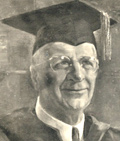
ABOUT FRANK
W. THOMAS
CANON OF
JOURNALIST ETHICS
Bulldog News Staff
 Our
pride in each new issue of the Bulldog Newspaper, it's beauty and
cleverness shows the leadership we are known for. Welcome to the
most distinctively conservative news page in on-line journalism
today. Scrupulously conservative & nonpartisan, the Bulldog News
has sought to promote an informed student and university community
electorate since 1958. Our
pride in each new issue of the Bulldog Newspaper, it's beauty and
cleverness shows the leadership we are known for. Welcome to the
most distinctively conservative news page in on-line journalism
today. Scrupulously conservative & nonpartisan, the Bulldog News
has sought to promote an informed student and university community
electorate since 1958.
The proliferation of the new media internet newspapers has put
greater pressure on print media newspapers and magazines, both for
advertisers' dollars and for consumers' leisure time. As the market
fragments into a more diverse readership, print mediums are struggling
to cope with ever shrinking rebenue streams. On the average day,
media of all types consume about nine hours of a reader's time.
Americans watch more than four hours of television and listen to
the radio for three hours, but they read the newspaper for only
28 minutes and consumer magazines for 14 minutes. In 2002 the nation
had 1,570 daily newspapers- downb from 1,745 in 1980-and about 7,400
weekly newspapers.
Despite a growing population (a 22% increase since 1970), daily
newspaper circulation has stagnated at about 62 million copies for
the past several decades. America's daily circulation is exceeded
only by Japan, whose 124 newspapers have a daily circulation of
72.5 million.
Germany and Britain have the next largest circulations, with 21
million copies each. In 1970, newspapers reached 98% of U.S. households.
Today, newspapers reach less than 70% of the nation's households,
and much less in some regions. Ownership of daily newspapers is
highly concentrated.
Just 135 newspaper chains own three-quarters of the nation's daily
newspapers and control about the same share of the dailies' circulation.In
this student run newspaper, the separation of news from the editorial
is intended to serve the reader, who is entitled to the facts in
the news and to opinions in the editorials.
Nothing in these functions is intended to eliminate from the news
honest, in-depth reporting, or analysis or commentary when plainly
depicted as such.
The Bulldog Newspaper is the off-campus student-run journal of
news and opinion at Fresno State University. All opinions expressed
in articles, features, photos, ads, or editorials are solely those
of the individual author(s) and do not necessarily reflect the views
of the Frank W. Thomas Bulldog Education Foundation, the
Bulldog News, its editors, or its staff.
Each student, graduate, and staff person of the Foundation is
entitled to a free copy of the Bulldog News. Additional copies can
be purchased for $20 per semester for a mailed subscription. The
on-line version of the Bulldog New is provided via Internet delivery,
free of charge.
The Bulldog News is published by the WebPortal community trust,
a section 501(c)(3) non-profit corporation and does not endorse,
support, or oppose candidates or proposed legislation. All contributions
to the Friends of the Bulldog News by individuals, corporations,
and foundations are tax deductible. The Bulldog News' front page
features provide objective facts and news analysis of all the
crucial issues facing successful higher education students and
alums today.
In return for accepting this restriction on the dispersion of revenues,
and for the commitment to devote all revenues to furthering charitable
(or otherwise public service oriented) work, nonprofit enterprises
pay no taxes, receive subsidized mail service, have access to low
interest loans, sometimes exercise the power of eminent domain,
and commonly receive direct government subsidies.
The rationale for the preferential treatment given nonprofits is
that they are better able to provide important public services than
are private for-profit enterprises.
The elimination of the profit motive and the provision of subsidies
allow nonprofits to perform essential services that, because of
thin markets, poor consumer information, or public goods problems,
would otherwise not be provided or would be provided poorly.
In the early days, we served this mission by researching and recording
in-depth news and feature stories and passing them on to local newspapers
around the country.
Today, that public service continues with a web-based feature on
The Fresno State Bulldog Newspaper off-campus Web site that provides
timely news stories on key local, State, and Congressional votes
and a searchable database.
For the casual political observer, the Bulldog News' acclaimed
public opinion research
Challenge of Democracy Survey offers a continuing measure of
the dynamic student body political opinion on local, state and national
issues compared with empirical national samples.
The Bulldog News is partnering with the Northwestern University
political science department in order to access and compare the
ongoing collection of student opinon.
The Survey, one of American university students' most heavily visited
Web sites and click-through features, allows students to compare
their personal position on key political issues to those of a larger
nationawide databas of student opinion surveyed.
Each issue of Bulldog News begins with the the most important
business news of the day, and a succinct treatment of the day's
most important political and world events. The front page feature
articles are designed to give readers the insight and perspective
essential to informed decision making.
The Bulldog News' features some of the most vehemently
debated political, social, and public policy topics confronting
the the college campus and the country today. Topics such as the
privatization of government services, health care, presidential
politics, education, drugpolicy, taxes, affirmative action roll-back
and many more are presented with a perspective you simply can't
find in other mainstream media.
The Bulldog News profiles many of the nation's top achievers
and tells you how and why each of them made it to where they are
today.
The Front Page brings you the Bulldog News' unique and challenging
'Editorial' feature, guaranteed to provoke and stimulate thought
on issues of local & national concern. Bulldog News does
not aimto be "politically correct". Our mission is to
present truth and interpret facts just as we see them!
By reading the Bulldog News' front page every day, you'll
get the informational edge you need to succeed in today's America!
Because The Bulldog News is one of only a handful of student-run
conservative (non-partisan) newspapers operating independently of
the California State University System it serves, the non-profit
corporation publishing the paper exists entirely on advertising
revenues and gifts from advertisers, supporters, members, and subscribers.
The paper's break-even budget is stable enough to ensure that
a fully implemented Internet Web Site posts a new front page five
mornings a week, but expenditures that are not absolutely necessary
often fall out of the equation.
Therefore, it has not been possible to publish a newsprint edition
of the Bulldog News. Currently, the management is attempting to
obtain grant funds in order to pay the cost of starting-up a weekly
print edition with 10 pages of news stories and classified listings.
For his reason, new computers in the newsroom and a travel budget
for reporters - things that are key to the training mission of the
newspaper - cannot always be accommodated when desired.
That's why The Bulldog Newspaper Foundation exists. All
funds raised by the Foundation are strictly earmarked for student
newsroom training, whether it be sending a reporter to a day-long
conference on media ethics, or helping to pay for photo processing
equipment similar to that found at larger newspapers where our staffers
might someday work.
The Fresno State campus and off-campus university grad students
in surrounding communities provide our reporters, photographers
and editors with plenty to cover; the Foundation serves
to ensure that they write, process and edit on the kind of equipment
that will prepare them for a career in journalism or related fields.
he seven-member Bulldog Newspaper Foundation board is composed
of former Fresno State Bulldog News' staff members and other
supporters of the paper and its goals.
Howard E. Hobbs, PhD, JD, the general editor,
and CEO of the national conservative Daily Republican Newspaper,
Inc. is the Bulldog News' staff mentor and sponsoring editor.
Hobbs is a 1958 Fresno State Ford Fellow who was in the California
State legislature, and now also serves the as our Foundation chairperson.
Our goal for 1998-2000 is to provide the support necessary to
help The Bulldog News' online Web site become the best online journalism
training center on any university campus.
Online technology is already influencing the career paths of many
young conservative journalists, and - assuming that trend continues
- The Bulldog News goal for 1998-2000 is to provide the support
necessary to provide hands-on conservative (non-partisan) online
technical training for student journalists and to publish the writing
of university students, faculty, and noted alums in a first-rate
on-line news service.
The newspaper's online news department has the potential for significant
growth in the near future, but will need the support of the Foundation
to make sure it happens sooner rather than later.
A unit of The Bulldog Newspaper Foundation, the American
Journalism Institute exists to bring interested University
alumni and former University students together as well as to provide
mentorship to the current newsroom staff.
Any monetary or in-kind contribution to The Bulldog Newspaper
Foundation supports a one-year membership in the Newspaper's
Alumni Association.
Membership includes a quarterly alumni newsletter, a membership
directory published biannually, and invitations to all alumni gatherings.
Institutes were recently held in Fresno and Sacramento, and others
are planned for Washington, D.C.
All revenues raised from alumni donations go toward newsroom training
and equipment upgrades at The Bulldog News.
Our development goal for 1997-1998 is to obtain sufficient financial
support to provide an additional student writer and begin distribution
of on campus weekly print edition the Bulldog News. Advanced
digital scanning equipment purhahsed with alumni contributions was
recently installed in the newspaper's graphics art department.
The Bulldog News is not affiliated with Fresno State University,
which is one of the oldest of the state universities. The campus
was founded in 1911 as a state normal school. Over time, the campus
expanded its academic programs, becoming a state college in 1935,
and achieving full university status in 1972.
Located amid vineyards and orchards at the northeast edge of the
City of Fresno, the campus is an official arboretum boasting more
than 3,000 trees. Planted in the heart of the agriculturally rich
San Joaquin Valley, near three major national parks, the university's
987 full and part-time faculty serve 17,182 students.
The 327-acre main campus features more than 46 buildings, with
an additional 34 structures on the 1,083-acre University Farm, one
of the most modern agricultural facilities in the west. Two student
unions, indoor and outdoor theaters, swimming facilities, a 4,500-seat
baseball stadium, and a 41,000-seat football and soccer stadium
complement the outstanding research facilities which include computer,
engineering, electronics, and industrial technology laboratories.
Fresno State University offers 56 baccalaureate degree majors,
with more than 100 options, master's degrees in 40 fields of study,
and a joint education leadership doctorate with the University of
California, Berkeley.
In 1997 Fresno State University takes pride in its claim that its
faculty places emphasis on practical studies. Fresno State, having
begun as a teacher training institute, still has the reputation
for its preoccupation with training students for welfare state jobs
in an ever expanding government job market, e.g. elementary school
teachers, public administrators, social workers, health care workers,
city planners, police, correctional & probation officers.
This Fall, only 27 percent were lower division students, 55 percent
were upper division students, with 17 percent in graduate degree
studies.
To help the Bulldog Newspaper in its conservative education mission
on the Fresno State campus, or for more information, e-mail
Bulldog Newspaper Foundation.
Contact Points:
Editor & Publisher
The Bulldog Newspaper,[BulldogNews.Net]
Off Campus Mail Service
River Park Box 3246
Pinedale, California 93650
[Tele-Fax 559.298.9349]

Ocupational Outllook for Writers
A college degree generally is required for a position as a writer
or editor. Although some employers look for a broad liberal arts
background, most prefer to hire people with degrees in communications,
journalism, or English. For those who specialize in a particular
area, such as fashion, business, or legal issues, additional background
in the chosen field is expected. Knowledge of a second language
is helpful for some positions.
Technical writing requires a degree in, or some knowledge about,
a specialized field—engineering, business, or one of the sciences,
for example. In many cases, people with good writing skills can
learn specialized knowledge on the job. Some transfer from jobs
as technicians, scientists, or engineers.
Others begin as research assistants, or trainees in a technical
information department, develop technical communication skills,
and then assume writing duties. Writers and editors must be able
to express ideas clearly and logically and should love to write.
Creativity, curiosity, a broad range of knowledge, self-motivation,
and perseverance also are valuable. Writers and editors must demonstrate
good judgment and a strong sense of ethics in deciding what material
to publish.
Editors also need tact and the ability to guide and encourage others
in their work. For some jobs, the ability to concentrate amid confusion
and to work under pressure is essential. Familiarity with electronic
publishing, graphics, and video production equipment increasingly
is needed.
Online newspapers and magazines require knowledge of computer software
used to combine online text with graphics, audio, video, and 3-D
animation. High school and college newspapers, literary magazines,
community newspapers, and radio and television stations all provide
valuable, but sometimes unpaid, practical writing experience.
Many magazines, newspapers, and broadcast stations have internships
for students. Interns write short pieces, conduct research and interviews,
and learn about the publishing or broadcasting business. In small
firms, beginning writers and editors hired as assistants may actually
begin writing or editing material right away. Opportunities for
advancement can be limited, however.
In larger businesses, jobs usually are more formally structured.
Beginners generally do research, factchecking, or copy editing.
They take on full-scale writing or editing duties less rapidly than
do the employees of small companies. Advancement often is more predictable,
though, coming with the assignment of more important articles
SOLID GOLD COPY EDITING TOOLS
FOR AWARD WINNING JOURNALISTS
by HOWARD HOBBS,
Sponsoring Editor the Bulldog News
WASHINGTON D.C. - What is news? The answers to this question
are daunting. Some students say that news is '...whatever is happening,
and sometimes things that have not yet happened.'
Whatever it really is, it should be an intersting story that
is clear, concise, and complete.
Copy editing makes every news story remarkable for its simplicity.
This happens because editors are knowledgeable of and proficient
in usage of the English language as an artistic communication
tool.
The following Bulldog Newspaper Foundation's digital electronic
reference materials are very powerful when it comes to the means
and methods available to those engaged in the profrssion of e-journalism
today. Use them with great caution. Treat them with respect and
they will serve you well.
How to Cite Internet Sources
How to Cite a Print Source
Dictionaries
Legal
Resources
Copyright
Law and Intellectual Property
Copyright
Copyright on the Web
Patents
Trademarks
Periodicals
Copyright Law and Intellectual
Property
Copyright
Patents
Trademarks
Periodicals
General Communication Sites
Scholarly
Communication and Technology Papers from a paper organized
by the Mellon Foundation; lots of useful material.
Scholarly
Electronic Journals - Trends and Academic Attitudes: A Research
Proposal
By Philip McEldowney, UVa.
PEAK:
Pricing Electronic Access to Knowledge
Project at UMichigan, conducted by Jeff MacKie-Mason.
Electronic
Publishing Programs in Science and Technology
By Elizabeth Brown and Andrea Duda.
Taming the Serials
Jungel with the ISSN
The ISSN (International Standard Serials Number) homepage.
Newsletter
on Serials Pricing
Lots of information about trends in serials pricing.
Library
and Information Science
Library Science and librarianship materials, companies and organizations
on the web.
Buildings,
Books, and Bytes
This report reveals what library leaders and the public have
to say about the future of libraries in the digital age.
Scholarly
Society
Access to information about scolarly societies around the world.
The
Penguin Electronic Mission
Literary publishing expanding into the electronic age.
Electronic
Texts in the Humanities
Reviewed texts, periodical literature, refereed journals and
more.
Freelance Writers
and Online Commerce
The National Writers Union that makes a strong case for self-publishing
and the power of the net for freelance writers.
National Press Club
Lots of resources for journalists.
Electronic Journals
Electronic
Journal Market Overview - 1997
By George Machovee, Colorado Allilance of Research Libraries.
Journal of Electronic
Publishing
An electronic archive of works deemed thoughtful and provocative
as well as reflective of the current issues and trends in electronic
publishing.
Future of Mathematical
Communication
The description of a winter 1994 conference sponsered by the
Mathematical Sciences Research Institute.
Bibliography
of the economics of scholarly communication
Scholarly Electronic
Publishing Bibliography
The bibliography presents selected works, published between
1990 and the present, that are useful in understanding scholarly
electronic publishing efforts on the Internet and other networks
-- prepared by Charles W. Bailey, Jr.
Hyper-G project
A modification of WWW specifically designed for electronic journals.
Journal
of Universal Computer Science is an example of a Hyper-G system.
Project Muse
A "new venture in electronic scholarly communications"
from Johns Hopkins University.
Scholarly
Journals at the Crossroads
A series of essays and discussions about the future of academic
journals. You may order a hard copy of the book by sending email
to osap@cni.org. You may also download
a copy.
Tragic
loss or good riddance? The impending demise of traditional scholarly
journals
An interesting discussion of the future of electronic journals.
On
the Road to Electronic Publishing
By Andrew Odlyzko. A followup to the above paper.
The
PostGutenberg Galaxy
An article by Stevan Harnad.
HyperJournal
A discussion list devoted exclusively to electronic journals,
especially those which publish on the World Wide Web. It is concerned
with all aspects of the production and publication of electronic
journals, particularly those managed by academics.
Pricing
Information Goods
A paper by Hal R.
Varian, with emphasis on problems facing electronic journals.
Scholarly Journals
on the Web
This directory provides links to established Web-based scholarly
journals that offer access to English language article files without
requiring user registration or fees.
Physics E-print Archive
An 11 page paper describing the archive at Los Alamos.
Association of Research Libraries
The ARL gopher page on scholarly communication. ARL's
1995 list of Electronic Journals and Newsletters.
Electronic
Resources Project
A collection of electronic journals in the area of library,
archival and information sciences from the University of
Toronto.
OCLC
Electronic Journals Online
Vannevar
Bush's Vision
A 1945 article that describes his ideas of hypertext.
Association for Computing Machinery
An international scientific and educational organization dedicated
to advancing the art, science, engineering, and application of
information technology, serving both professional and public interests
by fostering the open interchange of information a nd by promoting
the highest professional and ethical standards.
First Monday
a peer-reviewed, electronic journal dedicated to the Internet,
and only available on the Internet.
Electronic Magazines
WEBster: The Cyberspace
Surfer
A World Wide Web E-Zine issued twice monthly all the breaking
Web news, hot test product releases and latest technology concerning
the Net. Trial issues are available free, there is a subscription
fee.
D-Lib Magazine
D-Lib Magazine is a monthly magazine with articles, news, and
commentary on all aspects of digital library research.
Extensible
Markup Language (XML)
From Computerworld.
INTERNET PUBLIC LIBRARY
A group at the University of Michigan is developing a public
library on the Internet and anyone with a Web browser can enter
and check it out. The IPL provides a variety of reference sources
and information about electronic libraries. While still in its
infancy, IPL offers the blueprints of the future electronic library.
The
SCAM Approach to Copy Detection in Digital Libraries
Interesting article on how to detect copies and near-copies
of digital documents.
Illinois Digital Library
Initiative Project
Bunch of DL stuff.
INTERCAT
The Online Computer Library Center (OCLC) is creating a catalog
of Internet resources that will be accessible via the Internet.
This page is a good place to find out about the project and the
resources currently available.
D-Lib
D-Lib is a forum for researchers and developers of advanced
digital libraries. It is coordinated by the Corporation for National
Research Initiatives for the Information Infrastructure Technology
and Applications task group of the High Performance Computing
and Communications program
UM
Digital Library Project
A joint project of Univ. of Michigan, NSF, NASA, and ARPA. The
content will emphasize a diverse collection, focused on earth
and space sciences, which can satisfy the needs of many different
types of users. They have a prototype
of the UMDL available.
UM TULIP Project
An initiative of Elsevier Science Publishers to explore the
issues involved in electronic distribution of scholarly journals.
The TULIP project involves nine universities and about sixty Materials
Science journal titles.
Carnegie-Mellon Digital
Video LibraryProject
The DVL project will establish a large, on-line digital video
library by developing intelligent, automatic mechanisms to populate
the library and allow for full-content and knowledge-based search
and retrieval via desktop computer and metropolitan area networks.
Roles for Electronic
Brokers .
Paper by Paul Resnick, Richard Zeckhauser and Chris Avery concerns
brokering services (e.g., matching providers with consumers, negotiating
prices), not product delivery. It is part of the Center
for Coordination Science at MIT.
Report
on Electronic Publishing on Library Services in the UK
Simon
Fraser Electronic Library Project
The library is a part of the Internet Electronic Library Project
at SFU, being carried out by Prof. Rob Cameron of the SFU School
of Computing Science in collaboration with the SFU Library.
Attention Contributors & Authors
The Bulldog Newspaper production process includes the following
steps:
- copyediting
- return of copy edited manuscript to author
- author's response goes back to copyeditor
- final copy edited article goes to html "typesetter"
- typesetter enters edits html tagging & formatting
- proofreading
- author sees formatted version
- typesetter makes final html corrections
- story is published (i.e., posted on the site)
Individuals subscribers and institutions are allowed to use the
content liberally, with permission to do the following posted
on the Web site:
- read articles directly from the official journal servers,
or from any other server that grants you access
- copy articles to user's own file space for temporary use
form your own permanent archive of articles, which user may
keep even after subscription lapses
- display articles in the ways most convenient to user (on one's
computer, printed on paper, converted to spoken form, etc.)
- apply agreeable typographical styles from any source to lay
out and display articles
- apply any information retrieval, information processing, and
browsing software from any source to aid study of articles
- convert articles to other formats from the LaTeX and PostScript
forms on the official servers
- share copies of articles with other subscribers
- share copies of articles with nonsubscribing collaborators
as a direct part of collaborative study or research
E-Library database subscribers may also:
- print individual articles and other items for inclusion in
periodoical collection or for placing on reserve at the request
of a faculty member place articles on your campus network for
access by local users, or post article listings and notices
on the network
- share print or electronic copy of articles with other libraries
under standard interlibrary loan procedures
American E-News Links:
National Newspapers
Alabama
Alaska
Arkansas
Arizona
California
Colorado
Connecticut
Florida
Georgia
Hawaii
Idaho
Illinois
Indiana
Iowa
Kansas
Kentucky
Louisiana
Maine
Maryland
Massachusetts
Michigan
Minnesota
Mississippi
Missouri
Montana
Nebraska
Nevada
New Hampshire
New Jersey
New Mexico
New York
North Carolina
North Dakota
Ohio
Oklahoma
Oregon
Pennsylvania
Rhode Island
South Carolina
Tennessee
Texas
Utah
Vermont
Virgina
Washington
Washington D.C.
West Virginia
Wisconsin
Wyoming
National College and University Press
- Adelaide
University - On Dit - student paper.
- Albion College
- The Pleiad - student newspaper.
- Alfred University -
Fiat Lux
- American University
- The Eagle's Web - weekly - campus, metro, sports, Stories
.
- Amherst College
- The Amherst Student
- Auburn University
- Auburn Plainsman Online, The - student newspaper.
- Azusa Pacific
University - The Clause
- Ball State - The
Ball State Daily News
-
Bates College - The Bates Student - since 1873.
- Baylor University
- Lariat - student newspaper.
- Biola
University - Chimes
- Bloomsburg University
- The Voice
-
Boston College - Boston College Chronicle - internal newspaper
published by the Office of Public Affairs.
-
Boston College - Stylus - the Art and Literature magazine
of Boston College.
-
Boston College - The Heights - Boston College's independent
student weekly.
- Boston
College - The Observer - online version of Boston College's
only conservative, Catholic newspaper.
- Boston University - Daily
Free Press - award-winning independent student newspaper.
- Bradley
University - Bradley Scout On-Line, The
- Brigham Young University
- Student Review - underground newspaper for BYU and UVSC.
- Bringham
Young University, Hawaii Campus - Ke Alaka'i - weekly newspaper.
- Brock University -
Brock Press, The
- Brown University
- Brown Daily Herald
- Brown University/RISD
- The College Hill Independent - weekly newspaper published
by students from Brown University and the Rhode Island School
of Design.
- Brussels Free
University - De Krant - in Dutch.
- Bucknell
University - The Bucknellian
- Buena Vista University
- The Tack - The online version of Buena Vista University's
award-winning student newspaper.
- Buffalo
State College - The Record - student newspaper.
- Butler University
- Dawgnet - online version of The Butler Collegian.
- California
Polytechnic State University - Mustang Daily - student newspaper.
- California Polytechnic
University, Pomona - Poly Post
- California State University,
Fresno - Bulldog Newspaper - scrupulously conservative student
news service.
-
California State University, Fullerton - The Daily Titan
-
California State University, Hayward - The Pioneer - student
newspaper.
- California
State University, Long Beach - The Forty-Niner.
- California
State University, Long Beach - The Long Beach Union Newspaper
- California State University,
Northridge - Daily Sundial - student newspaper. News, sports,
features, opinion and more.
- California State Universtity,
Sacramento - The State Hornet - student newspaper.
-
Canisius College - Griffin, The
- Carleton College
- The Carletonian
- Carleton University
- Centretown News - community newspaper in the Ottawa-Carleton
region, produced by students of the School of Journalism and
Communication at Carleton University.
- Carleton University
- The Charlatan - independent student newspaper.
- Carleton University
- Vena Contracta - monthly newspaper from the Student Engineering
Society.
- Carthage College
- The Current
- Central Michican University
- Central Michigan LIFE - a student run newspaper providing
entertainment, sports and news about Central Michigan University's
campus.
-
Chalmers University of Technology - Elektra - published
by the Electrical Engineering department. Articles, links and
more. In Swedish.
- Charlatan, The
- Carleton University - independent student newspaper.
-
City College of New York - The Campus - student newspaper.
- Clarkson University
- Clarkson Integrator
- Clemson University
- The Tiger
- Colgate University
- The Colgate Maroon-News
- College
of Marin - Echo Times Online
- College of William and Mary
- T.J. Times
- College of Wooster
- The Wooster Voice - student run weekly publication.
- College Press Network
- a collection of collegiate newspapers, news, resources and
special events for college students.
- Columbia
College, Chicago - The Chronicle
- Columbia
University - Bronx Beat - sponsored by students at the School
of Journalism.
- Columbia
University - The Columbia Daily Spectator Online
- Connecticut College
- Voice - news, events, opinions, and issues.
- Cornell University
- Cornell Daily Sun Online
- Creighton University
- Creightonian Online
- Dakota State University
- Dakota Access
- Dalhousie
University - Dalhousie Gazette - all the news, sports, arts,
and more.
- Dartmouth College -
Dartmouth Review - independent newspaper.
- Dartmouth College
- The Beacon - e-edition of conservative student newspaper.
- Dartmouth College
- The Dartmouth - America's oldest college newspaper, founded
1799.
-
Davidson College - The Davidsonian
- Del Mar College
- Del Mar Foghorn
-
Delft University of Technology - Delta - weekly newspaper.
- DePaul University
- The DePaulia - official student newspaper.
- DePauw University
- the DePauw
-
DongA University - DongA News - bimonthly student newspaper.
- Drake University
- The Times-Delphic
- e.peak, the - Simon Fraser
University
- Eindhoven
University of Technology, Netherlands - Cursor - weekly
university newspaper.
- Elizabethtown
College - Etownian Online
- Embry-Riddle Aeronautical
University - The Avion
- Emory University -
The Emory Wheel - published twice-weekly.
- excalibur - York
University - the main campus newspaper.
- Experience@Los
Medanos Community College - student newspaper.
- Ferrum College
- Iron Blade - student newspaper.
- Florida International University
- Beacon
- Framingham State College
- The Gatepost - weekly independent student newspaper.
- Furman
University - The Paladin - weekly newspaper.
- Gateway, The
- University of Alberta
- Gauntlet, The - University
of Calgary
- George Mason
University - Broadside - student newspaper.
- George Mason University
- Mason Gazette
- George Washington University
- GW Hatchet
- George Washington
University - Independence Magazine - the voice of reason.
- Georgia Tech - The
Technique
- Georgian
College - The Georgian Eye - independent, student, weekly,
tabloid paper.
-
Gettysburg College - The Gettysburgian - weekly student
newspaper offering news, opinions, sports, arts and entertainment.
-
Glasgow University Guardian
- Golden Words
- Queen's University - a.k.a. "Canada's Other National Newspaper."
- Goshen College -
Goshen College Record - weekly student newspaper.
- Guardsman
- City College of San Francisco
-
Gustavus Adolphus College - The O-Press - uncensored forum
devoted to free expression and the discussion of controversial
issues.
- Hamilton College - SpecOnline
- Hamline University
- Oracle Online
- Harvard University
- Harvard Crimson Online
- Henderson Community
College - The Hill
- Hendrix College
- The Profile - student newspaper.
- Hesston
College - Hesston College Horizon
- Humber College
- Et Cetera - reporting the college and the Toronto area.
- Humboldt State
University - Lumberjack
- Illinois State
University - The Daily Vidette - updated every weekday,
this site gives news relating to the college student and the
surrounding community.
- Indiana
University of Pennsylvania - Penn, The
- Indiana University, Bloomington
- Indiana Daily Student - online companion to the newsprint
Indiana Daily Student.
- Indiana University,
Purdue University Indiana - The Sagamore
- Iowa State University
- Iowa State Daily
- Ithaca
College - The Ithacan
- James Madison University
- BreezeNet - online version of student newspaper.
- Johns Hopkins University
- Johns Hopkins News-Letter
-
Journal, The - Saint Mary's University
- Kansas State Collegian
-
Katholieke Universiteit Leuven - Campuskrant
-
Kennesaw State University - The Sentinel - weekly student
newspaper.
- Kent State University
- Digital Kent Stater
-
Kenyon College - Kenyon Collegian
- Korea University -
The Granite Tower - monthly English magazine.
- Lafayette College
- The Lafayette
- Lake Superior State
University - The Compass
-
Laramie County Community College - Wingspan Online - campus
newspaper.
- Laurentian
University - Lambda - official student newspaper.
- Lehigh
University - The Brown and White - bi-weekly newspaper since
1894.
- Linfield College
- Linfield Review
- London Student
Newspaper - Europe's largest student newspaper. It is read
by 30,000 students across the capital, and is produced fortnightly
by a team of student volunteers.
- Loras College -
Lorian
- Louisiana State
University - Daily Reveille
- Loyola University
- The Loyola Phoenix
- Macalester College
- Mac Weekly - student newspaper which includes subscription
information and staff web pages.
-
Mansfield University - Flashlight, The
-
Marietta College - The Marcolian - weekly student newspaper
published during the academic year.
- Marquette
University - The Marquette Tribune - biweekly student newspaper.
- McGill Tribune,
The - McGill University - published by the Students' Society.
- Memorial
University of Newfoundland - The Electronic Muse - student
newspaper.
- Metropolitan State
College of Denver - The Metropolitan - student newspaper
serving the Auraria campus since 1979.
- Miami-Dade
Community College Catalyst
- Michigan State University
- The State News
- Michigan
Technical University - MTU Lode
- Michigan Technological
University - Daily Bull
- Middlebury
College - The Campus - official weekly student newspaper.
- Millersville University
- The Snapper - updated weekly.
-
Millikin University - The Dec Online - student newspaper.
News, sports, features, campus views, opinions, events, and
more.
- Milwaukee School
of Engineering - Ingenium - publicated eight times per year.
Letters to the editor are welcome.
- Mississippi State
University - The Reflector - student newspaper published
during school sessions.
-
MIT@
- Monash
University - Lot's Wife
- Moorhead
State University - The Advocate - weekly newspaper of the
campus community.
- Mount Allison University
- ArgosyNet - online independent student journal, with international
news, arts editorials, sports and more.
- Mount
Holyoke College - The College Street Journal - weekly news
publication, produced by the Office of Communications.
-
North Carolina State University - Nubian Message - offering
an Afrikan American voice for the school.
- North Carolina
State University - Technician
- North Idaho College
- The Sentinel - student newspaper.
- North Iowa Area
Community College - Logos - student newspaper.
- Northeastern University
- The Northeastern News - students' newspaper.
- Northeastern University
- The Northeastern Voice - faculty and staff newspaper.
Published 18 times a year.
- Northern Arizona University
- Lumberjack
- Northern Illinois University
- Northern Star
- Northland
College - Drifts Online - student newspaper.
-
Northwest Missouri State University - The Northwest Missourian
- student-produced newspaper. Updated every Thursday excluding
university holidays.
-
Northwestern University - Northwestern Observer
- Northwestern
University - The Daily Northwestern
- Oakland University
- The Oakland Post
- Ohio University - The
Post - independent daily student-run newspaper.
-
Ohio Wesleyan University - The Transcript
- Oklahoma
Baptist University - The Bison - since 1920.
- Oklahoma State
University - The Daily O'Collegian - for everyone interested
in OSU and Stillwater, OK.
- Old Dominion
University - Mace & Crown
-
On-Line Student Voice - Newspaper of the University of Wisconsin
- River Falls
-
OneEurope Magazine - The European Students' Magazine
- Online Evergreen,
The - A weekly journal composed of stories from the Daily
Evergreen.
- Ontarion, The
- University of Guelph
- Orange and
Blue Observer, The - our mission is to provide students
with a conservative alternative to the campus daily.
-
Orion, The - Chico State University@
- Oxford Independent
- The largest independent student newspaper in Oxford; for all
the students at Oxford University and Oxford Brookes University.
- Oxford University
- Cherwell Online - the independent Oxford University student
newspaper.
- Pacific Index
- student newspaper. Woo-hoo!
- Pacific
Lutheran University - Campus Voice
- Paisano News -
Univ. of Texas at San Antonio - a self-supported award winning,
student-run newspaper.
- Palatinate - Durham
University, United Kingdom - independent student newspaper.
- Pasadena
City College - Courier
-
pBlattform - Monthly Newspaper of the Student Association
at the Agricultural university of Vienna (HochschülerInnenschaft
an der Universität für Bodenkultur Wien)
- Peak, The - University
of Western Ontario - alternative student magazine.
- Pennsylvania State
University - the digital Collegian - on-line version of
Penn State's student-operated daily newspaper, featuring local
and campus news, opinions, arts, entertainment, and an emphasis
on PSU sports.
-
Pepperdine University - The Graphic Weekly
- Perspectives
- University of British Columbia - English-Chinese bilingual
student paper.
- Pittsburg State
University - CollegiOnline
- Plymouth State
College - The Clock - online news and sports of PSC and
the Plymouth community.
- Princeton University
- Daily Princetonian
- Princeton University
- The Princeton Spectator
- Prospectus,
The - Parkland Community College
- Providence
College - The Cowl - published weekly.
- Purdue University
Exponent - an indepenent daily newspaper covering the Purdue
University community.
- Queen's Journal,
The - Queen's University
- Radford University
- The Tartan
- Red & Green
Online
-
Regensburger Universitätszeitung - monthly paper edited
by the Universität Regensburg
- Retriever
Weekly Online, The@
- Rice News
- official weekly newspaper of Rice University.
- Rice University
- The Rice Thresher - the official student newspaper.
- Ripple On The Net
- Leicester University - independent student newspaper,
featuring music and film reviews as well as news, sports and
the arts.
- Rocky Mountain Collegian
- Colorado State University's 105 year old daily student newspaper.
-
Rose Thorn, The - weekly student newspaper.
- Round Table -
Beloit College - weekly student newspaper.
- RU News
Online - Radford University's monthly university newspaper.
- Ruprecht
- University of Heidelberg - campus paper (in German)
- Rutgers Univesity
- The Daily Targum
- Ryerson Polytechnic
- Eyeopener, The - student weekly.
- Ryerson Polytechnic
- Ryersonian, The - produced by the School of Journalism.
- Saint John's
University - The Record
- Salient Magazine
Online - official magazine of the Victoria University of
Wellington Students Association, publishing news, views and
reviews.
- San Diego State University
- Daily Aztec
- San Francisco Foghorn
- USF
- Santa Clara University
- Bronco Buzz - electronic undergraduate student newspaper.
- Savannah College
of Art and Design - The Georgia Guardian - weekly newspaper.
Covers local news and people, community events, sports, arts
and entertainment.
- Seattle Central Community
College - The City Collegian
- Seattle
University - The Spectator
- Seton Hall University
- The Setonian
- Shorter College - The
Periscope - student newspaper.
- Silhouette, The - McMaster
University - student newspaper.
- Simon Fraser
University - Simon Fraser News - contains stories and events
listings on SFU, its faculty, staff and students.
- Simpson College
- Simpsonian
-
Skidmore College - The Skidmore News Online
- South End
- Southern Illinois
University at Carbondale - Daily Egyptian
- Southern Methodist
University - The Daily Campus - independent student newspaper.
- Southwest Texas State
University - Daily University Star
-
Spartan Daily Newspaper at San Jose State University@
- St.
Cloud State University - University Chronicle - award-winning
twice weekly newspaper.
- Stanford University
- Stanford Daily Online
-
Stanford University - The Stanford Review - conservative
newspaper.
- Stephen F. Austin
State University - Pine Log
- Stevens
Institute of Technology - The Stute - online edition of
weekly newspaper.
- Sunderland
University - Degrees North - student newspaper.
- SUNY Binghamton
- Pipedream - online edition of the twice-weekly student
newspaper.
-
SUNY Buffalo - The Spectrum - student run newspaper published
thrice weekly.
- Syracuse University
- Daily Orange
- Tarrant
County Junior College - TCJC Collegian Online - published
by staff and students for the four campuses of Tarrant Junior
College in Texas.
-
Technischen Universität Berlin - TU Intern
- Temple University
- Temple News
- Texas A&M University
- Battalion Online
- Texas Tech University
- University Daily
- Tharunka
- UNSW, Sydney, Australian - Tharunka - University of NSW
student newspaper
- Trinity
College - The Trinity Tripod
- Troy State University
- Tropolitan
- Truman State University
- New Media Index
- Tufts University
- The Observer
-
Tufts University - Tufts Daily - independent, student-run
daily newspaper.
- Tulane Hullabaloo,
The
- UCF
InPrint - A Weekly Newspaper Serving the University of Central
Florida
-
UCF Report (Staff Newspaper)
- UCSD Guardian
Online - Includes classifieds, online forum, back issues,
and search database.
-
Underground, The - University of Toronto at Scarborough
- Universitetsavisa
- Universitetet i Trondheim - er en fri og uavhengig avis
utgitt av Norges teknisk-naturvitenskapelige universitet.
- University of Alabama
- Crimson White - online edition of the student produced
campus newspaper. Serving the Tuscaloosa campus, the online
edition is updated daily.
- University of Arizona
- Arizona Daily Wildcat
-
University of Arkansas - Arkansas Traveler, The
- University
of Bath Interal newspaper
-
University of Bristol - Epigram - covers a wide range of
topics important to student life in Bristol.
- University of California
Los Angeles - Daily Bruin
- University of California
Santa Barbara - Daily Nexus - daily student newspaper.
-
University of California, Berkeley - Berkeleyan - from the
Office of Public Affairs.
- University of California,
Berkeley - The Daily Californian - independent student publication.
- University of
California, Davis - The California Aggie
- University of California,
Riverside - Highlander Newspaper
-
University of California, Santa Cruz - Currents
- University of California,
Santa Cruz - Fish Rap
- University of California,Santa
Cruz - City on a Hill Press - student and community issues.
Watchdog of the policies of the UC administration.
- University of Central Arkansas
- The Echo
- University of Central
Florida - Knight Wire
-
University of Chicago - Chronicle
- University of Chicago
- The Chicago Maroon
- University
of Chicago Free Press - alternative student paper.
- University
of Chicago Weekly News - student newspaper.
- University of Cincinnati
- News Record - student newspaper.
-
University of Colorado at Boulder - Campus Press - student-produced
newspaper.
-
University of Colorado at Denver - Advocate, The
- University of Connecticut
- The Daily Campus - news, opinion, arts and entertainment,
and Husky sports for followers of the Husky blue.
- University
of Dayton - Flyer News
- University of Delaware
- The Review
- University of Denver
- Clarion - online edition of DU's weekly newspaper.
- University of Florida
- The Independent Florida Alligator - student-run daily
newspaper.
- University of Georgia
- The Red & Black
- University
of Guam - Triton's Call - student newspaper highlighting
campus events, controversies, opinions, entertainment, and sports.
Home of Toilet Tissue Man.
- University
of Hawaii at Manoa - Ka Leo O Hawaii - large daily student
newspaper of the University of Hawaii; also one of the largest
newspapers in the state.
- University of Hawaii
at Manoa - University aVenue - an independent, alternative
student newspaper.
- University of
Houston - The Daily Cougar
- University
of Houston - UHCN - faculty and staff news publication.
- University of Houston,
Downtown - Dateline
- University of Illinois
- Daily Illini - independent student online newspaper.
- University of Illinois
at Chicago - Chicago Flame - weekly independent newspaper.
- University of Illinois
at Chicago - UIC Today - independent daily.
- University of Illinois
at Springfield - The Journal
- University of
Iowa - The Daily Iowan - Iowa City's morning newspaper.
- University of Kansas -
University Daily Kansan - online student newspaper of the
University of Kansas, containing daily news coverage of KU and
related information.
- University of Kentucky
- Kentucky Kernel - independent student newspaper at the
Lexington Campus. Site features RealAudio and Quicktime content.
- University of Limerick
- An Focal
- University of Maine
- Maine Campus
- University
of Maryland at College Park - The Diamondback
- University of Maryland
Baltimore County - Retriever Weekly, The
- University
of Massachusetts at Amherest - Massachusetts Daily Collegian
-
University of Massachusetts at Amherst - Campus Chronicle
- University of Melbourne
- Qing Niao - Chinese newspaper published by a group of
Asian students.
- University of
Miami - Miami Hurricane Online - student news, sports news,
and editorials.
- University of Miami School
of Law - Res Ipsa Loquitur - student-run publication of
the School of Law.
-
University of Michigan - CAEN Newsletter - A monthly publication
from the University of Michigan Computer Aided Engineering Network
- University
of Michigan at Ann Arbor - Michigan Daily Online - all of
the content of the printed paper and more.
- University
of Michigan at Dearborn - Michigan Journal
- University
of Minnesota - Kiosk - electronic supplement to new faculty
and staff biweekly newspaper
- University of Minnesota,
Twin Cities - Minnesota Daily - student newspaper.
- University of
Mississippi - Daily Mississippian - 11,000 circulation student
newspaper published daily.
-
University of Missouri - The Current
- University
of Missouri at Columbia - The Maneater - twice weekly student
newpaper.
- University of Missouri at
Kansas City - University News - UMKC's student voice that
reaches 9,000 people on campus and throughout central metropolitan
Kansas City.
- University of
Montana - Montana Kaimin
- University of Nebraska
at Lincoln - The Daily Nebraskan - local news, sports and
opinion.
- University of
Nebraska at Omaha Gateway Newspaper - The official student
newspaper of the University of Nebraska at Omaha in Omaha, Nebraska.
-
University of Nevada Las Vegas - Rebel Yell
- University
of New Brunswick - The Brunswickan
- University of New Hampshire
- The New Hampshire - atest news, sports, arts, and opinion
updated twice weekly.
- University of New Mexico
- New Mexico Daily Lobo
- University
of New Orleans - Driftwood Online - award-winning newspaper.
Every week, Driftwood is filled with N.O. news, sports, and
entertainment.
- University
of New Orleans - New Driftwood OnLine, The
- University of Nijmegen
- KUnieuws - weekly newspaper.
- University of
North Carolina at Asheville - Banner
- University of North Carolina
at Chapel Hill - The Daily Tar Heel - student newspaper.
- University of North
Carolina at Charlotte - University Times
- University of North
Carolina, Grensboro - The Carolinian Online
- University of
North Dakota - The Dakota Student Online
-
University of North Texas - North Texas Daily
- University of Notre
Dame - The Observer - independent newspaper serving Notre
Dame and Saint Mary's.
- University of Oklahoma
- Oklahoma Daily
- University of
Oregon - Oregon Daily Emerald - daily student newspaper
- University of
Pennsylvania - The Daily Pennsylvanian - independent daily
student newspaper.
- University of
Regina - Carillon
- University
of Richmond - The Collegian
- University of Rochester
- Campus Times
- University of San Diego
- VISTA - undergraduate weekly publication.
- University of South
Carolina - The Gamecock - student newspaper. News, sports,
viewpoints, classifieds, plus...
- University of South
Dakota - Volante Online
- University of
South Florida - The Catalyst - weekly newspaper of New College
of USF.
- University of Southern
California - Daily Trojan - independent daily student newspaper.
-
University of Southern California Chronicle
- University
of Sussex - The Badger - students' union weekly bulletin.
-
University of Technology Munich, Impulsiv - The Students'
Union newspaper for Mathematics/Physics/Computer Science. (available
only in German)
- University of Tennessee
- The Daily Beacon
- University of Tennessee
at Martin - The Pacer
- University
of Texas at Arlington - The Shorthorn
- University of Texas
at Austin - Austin Review - conservative journal of opinion
for the UT campus, covering university, city, and state affairs.
- University
of Texas at Austin - The Daily Texan
- University of the Pacific
- The Pacifican
-
University of the Virgin Islands - UVIsion
- University
of Toledo - The Collegian Online - online version of this
award-winning student newspaper. Includes news, sports, opinion,
arts and life.
- University
of Tulsa - The Collegian
- University of Twente
- University of Utah
- Daily Utah Chronicle
-
University of Vienna - Die Universität - in German, English
and Spanish.
- University of Virginia
- The Cavalier Daily
- University
of Virginia - The Declaration
- University
of Warwick - Boar - online edition of an independent newspaper,
incoporating arts and music.
- University
of Washington - Online Daily
- University
of Washington - Ruckus - a monthly student paper covering
UW politics and other student issues, from the Student Action
Network's lefty perspective.
- University of Waterloo
- Imprint
- University of Western
Ontario - The Gazette - Canada's daily student newspaper,
published Tuesday through Friday during the school year and
weekly during summer intercession.
- University
of Wisconsin at Eau Claire - Free Radical - progressive
features newspaper.
- University of Wisconsin,
Madison - Badger Herald - independent student newspaper
since 1969.
- University of Wisconsin,
Madison - The Digital Cardinal
- University
of Wisconsin, Platteville - The Exponent
-
University of Wisconsin, River Falls - Student Voice
- University of Wisconsin,
Stout - Stoutonia Online
- University Register,
The - University of Minnesota, Morris - the Internet edition
of The University Register, the student run campus newspaper
of The University of Minnesota, Morris.
- University
Review of Texas - a monthly publication of the Texas Review
Society. An independent journal of opinion, the Review is distributed
(on newsprint) around the campus.
- Université Laval
- Impact Campus - Le journal des étudiants et étudiantes.
- Université Laval - Le Mercure
- La voix de communication pour l'étudiant en administration.
- USF Oracle - the offical
student newspaper.
- Utah State University
- Utah Statesman
- Valdosta
State University - WebSpectator, The
-
Vanderbilt Hustler - A twice-weekly student newspaper of
Vanderbilt University; includes all student articles and perspectives,
photos, and related HTML links!
- Vanguard - University
of South Alabama - student paper.
-
Varsity Online - University of Toronto - updated twice a
week during the academic year; source of news, opinions and
reviews for students in Toronto and elsewhere.
- Vasser Collge - The Miscellany
News - weekly newspaper.
- Villanova
University - The Villanovan - weekly student newspaper.
- Virginia
Wesleyan College - Marlin Chronicle Online
- Vision Online
- This is the Independent African-American Newspaper of the
University of Pennsylvania.
- Wabash College - The
Bachelor
- Wageningen
Agricultural University - Wisp'r
- Wake Forest University - Old
Gold and Black - weekly campus newspaper.
- Washington & Lee
University - The Trident
- Washington
University - Student Life - twice weekly student newspaper.
- Webster University
- The Journal
- Wesleyan
University - The Wesleyan Argus - student newspaper published
twice weekly.
-
West Valley College in Saratoga - The Norseman - student-run
newspaper.
- Western Carolina
University - Western Carolinian - student newspaper of Western
Carolina University in Cullowhee, NC.
- Western Kentucky
University - College Heights Herald
- Western Michigan
University - Western Herald
- Western Washington
University - Western Front
- Whitworth
College - The Whitworthian - weekly student newspaper.
-
Wichita State University - Sunfower
- Williams College -
Record Wired - on-line version of the Williams Record, a
weekly paper coming out every Tuesday.
- Xavier University
- Xavier Newswire
- Yale Daily News
- America's oldest college daily newspaper.
-
Yale Herald Crossword - weekly crossword, updated by its
author, Justin Weinberg.
- Yale Herald, The
- Yale
University Student Bulletin - Info for students considering
attending Yale. Academic, residential and campus life descriptions.
Also about admission and financial aid.
- Yeshiva University
- Commentator - undergraduate student newspaper.
- York University's
Bethune College - The Lexicon
BULDOG
NEWS ETHICS
CANON:
Members of the Bulldog
Newspaper Foundation staff believe that public enlightenment
is the forerunner of justice and the fouundation of the freedom
of the press.
The duty of Bulldog Newspaper journalist
is to further those ends by seeking truth and providing a fair
and comprehensive account of events and issues. Conscientious
journalists from all media and specialties strive to serve the
public with thoroughness and honesty. Professional integrity is
the cornerstone of a journalist's credibility. Members of the
Foundation share a dedication to ethical behavior and adopt this
code to declare the Foundation's principles and standards
of practice.
Student journalists should be honest,
fair and courageous in gathering, reporting and interpreting information.
Test the accuracy of information from all sources and exercise
care to avoid inadvertent error. Deliberate distortion is never
permissible.
Diligently seek out subjects of news stories
to give them the opportunity to respond to allegations of wrongdoing.
Identify sources whenever feasible. The public is entitled to
as much information as possible on sources' reliability.
Always question sources’ motives
before promising anonymity. Clarify conditions attached to any
promise made in exchange for information.
Make certain that headlines, news teases
and promotional material, photos, video, audio, graphics, sound
bites and quotations do not misrepresent. They should not oversimplify
or highlight incidents out of context.
Never distort the content of news photos
or video. Image enhancement for technical clarity is always permissible.
Label montages and photo illustrations.
Avoid misleading re-enactments or staged
news events. If re-enactment is necessary to tell a story, label
it.
Do not engage in pretense or dishonest
methods of gathering nes and information except when traditional
open methods will not yield information vital to the public. Use
of such methods should be explained as part of the story.
Tell the story of the diversity and magnitude
of the human experience boldly, even when it is unpopular to do
so. Avoid stereotyping by race, gender, age, religion, ethnicity,
geography, sexual orientation, disability, physical appearance
or social status. Support the open exchange of views, even
views they find repugnant.
Give voice to the voiceless; official
and unofficial sources of information can be equally valid. Distinguish
between advocacy and news reporting. Analysis and commentary should
be labeled and not misrepresent fact or context.
Distinguish news from advertising and
shun hybrids that blur the lines between the two. Recognize a
special obligation to ensure that the public's business is conducted
in the open and that government records are open to inspection.
Ethical journalists treat sources, subjects
and colleagues as human beings deserving of respect. Show compassion
for those who may be affected adversely by news coverage. Use
special sensitivity when dealing with children and inexperienced
sources or subjects.
Be sensitive when seeking or using interviews
or photographs of those affected by tragedy or grief.
Recognize that gathering and reporting
information may cause harm or discomfort. Pursuit of the news
is not a license for arrogance.
Recognize that private people have a greater
right to control information about themselves than do public officials
and others who seek power, influence or attention. Only an overriding
public need can justify intrusion into anyone’s privacy.
Avoid pandering to lurid curiosity. Be
cautious about identifying juvenile suspects or victims of sex
crimes.
Take care in identifying criminal suspects
in a story before the official filing of charges. Balance a criminal
suspect’s fair trial rights with the public’s right
to be informed.
Journalists will have no conflicts of
interest, real or perceived. Remain free of associations and activities
that may compromise integrity or damage credibility.
Refuse gifts, favors, fees, free travel
and special treatment, and shun secondary employment, political
involvement, public office and service in community organizations
if they compromise journalistic integrity.
Disclose unavoidable conflicts. Be vigilant
and courageous about holding those with power accountable. Deny
favored treatment to advertisers and special interests and resist
their pressure to influence news coverage.
Bulldog Newspaper Journalists are accountable
to their readers, viewers and each other. We clarify and explain
news coverage and invite open dialogue with the public.

|